
Key Summary
Singapore businesses can extend their marketing reach by placing QR codes on reusable shopping bags, promotional merchandise, packaging, and other physical touchpoints that travel beyond the original point of contact. When these QR codes lead to relevant digital offers, landing pages, coupons or interactive campaigns, businesses can encourage customers to engage online and measure their responses. From VivoCity’s QR-code mascots to the National Library Board’s QR-enabled book bags, Singapore examples show how physical marketing can create useful digital experiences. For SMEs, the opportunity lies in connecting offline reach with trackable online engagement through a well-planned QR campaign.
Introduction
A shopping bag leaves the store with its customer. A reusable tote can accompany someone to work, a café, a shopping centre or another neighbourhood. Promotional merchandise, delivery packaging and other branded items can also introduce a business to people who may never have visited its premises. These everyday objects create opportunities for brands to remain visible after the original transaction.

However, visibility alone does not tell a business whether its marketing is generating interest. Someone might notice a logo on a shopping bag without remembering the brand or taking any further action. For Singapore SMEs working with limited marketing budgets, the challenge is to turn that physical exposure into something more useful, such as a website visit, coupon download, registration, or repeat purchase.
QR campaigns offer one way to connect these two stages. A QR code printed on a bag, displayed on a moving brand mascot, or attached to promotional merchandise can lead customers to a digital destination. When the destination provides a relevant reason to engage, businesses can connect physical marketing with measurable online activity. The principle is simple: offline reach creates the opportunity, while the digital campaign gives customers a next step.
Singapore Case Studies: How QR Codes Turn Physical Touchpoints Into Digital Engagement
1. VivoCity: QR-Code Mascots That Encouraged Shoppers to Participate
During the 2013 Great Singapore Sale, VivoCity introduced a family of four life-sized QR-code mascots that moved around the shopping mall on weekends. The campaign encouraged shoppers to scan the codes for instant discount vouchers, daily prize draws and entry into a grand prize draw. Participants were also encouraged to like VivoCity’s Facebook page, with additional chances to win available through social sharing.
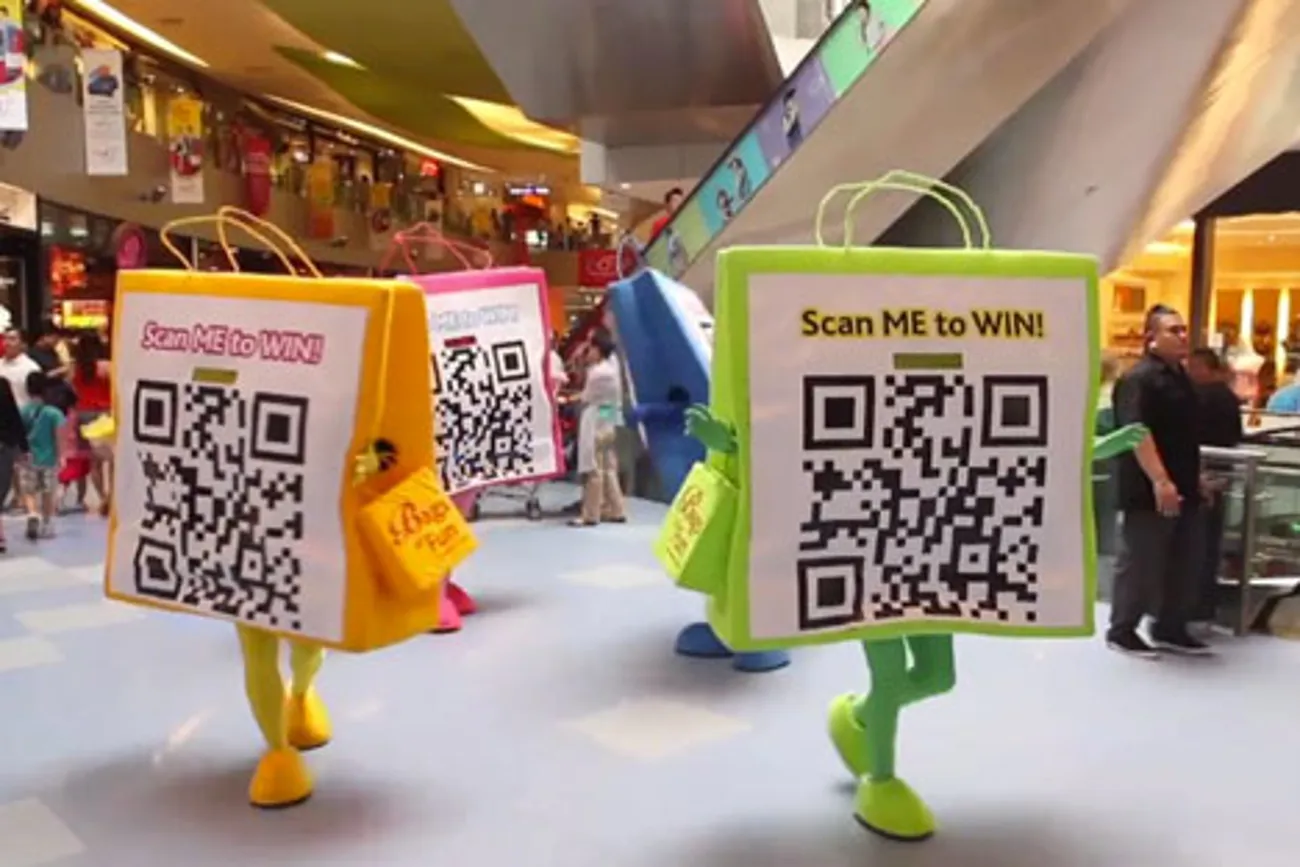
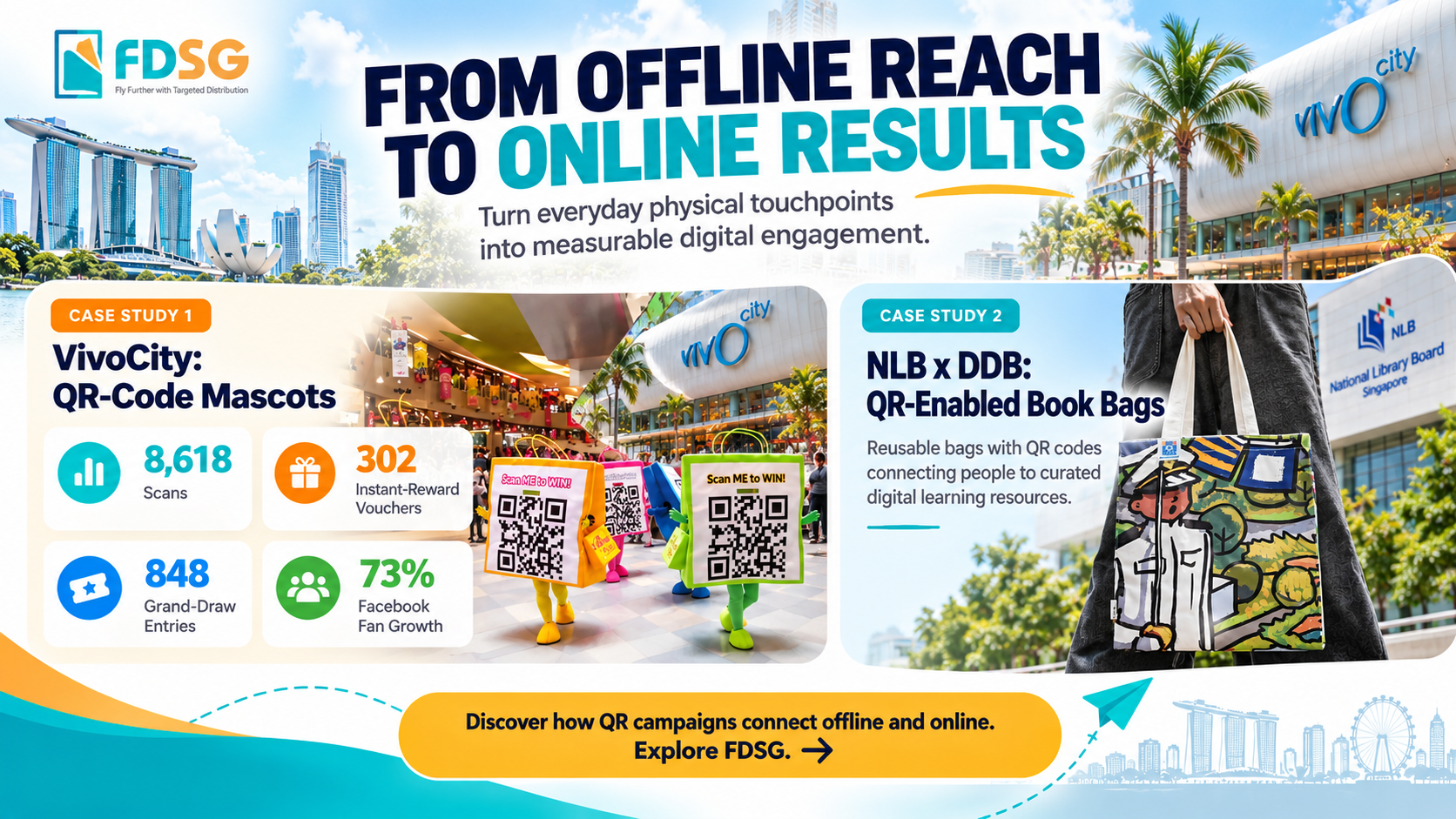
According to Campaign Asia’s case study, the campaign generated 8,618 scans, collected 302 instant-reward vouchers and received 848 grand-draw entries. VivoCity’s Facebook fan base also increased by 73%, from 6,039 to 10,439. Although the campaign used QR-code mascots rather than shopping bags, it demonstrates how a physical touchpoint can attract attention and encourage digital participation when customers receive a clear incentive to scan.
2. The LampPost Project: Giving Reusable Bags a Digital Purpose
In 2022, DDB Group Singapore and the National Library Board collaborated on a limited-edition reusable book bag through the LampPost Project. The bags were made from upcycled National Day banners and flags, with sewing work carried out by participants from Sembawang Family Service Centre’s SOWERS Project. Profits from the sale supported NLB’s kidsREAD programme.
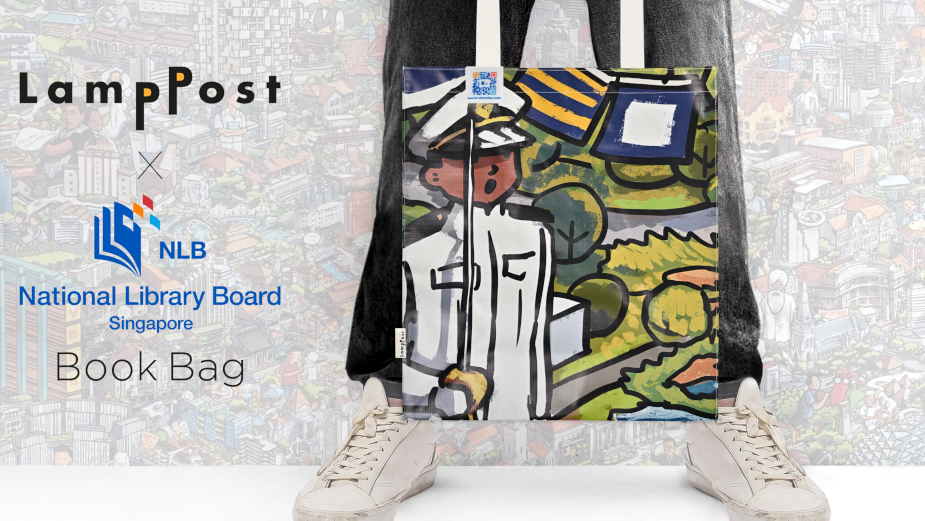
Each bag carried a QR code linking to curated NLB digital resources about Singapore and its National Day celebrations. As described in Little Black Book’s coverage of the project, the QR code gave buyers a useful digital destination related to the bag’s educational purpose. This example shows how physical merchandise can extend a brand or organisation’s message into an online experience, even when the campaign’s primary goal is education and community impact rather than commercial lead generation.
Why Singapore SMEs Should Connect Offline Reach With Online Results
Those two examples highlight an important marketing lesson: physical touchpoints become more useful when customers have a reason to interact with them. A shopping bag could offer a discount on the next purchase, while a promotional item could link to a product guide, loyalty programme or exclusive campaign. The best destination depends on the business objective and the audience receiving the item. A QR code that simply opens a generic homepage may offer less motivation than one that promises a clear, relevant benefit.
For Singapore SMEs, the next step is to connect physical distribution with measurable digital actions. For example, a retailer distributing branded shopping bags across several outlets could use different QR codes to compare campaign engagement by location. A café could direct customers to a repeat-visit coupon, while an event organiser could use branded merchandise to encourage registrations. Tracking scans, landing-page visits, coupon downloads and redemptions helps businesses understand which touchpoints attract interest and which offers encourage further action. The results can then inform future campaigns, although scans alone do not prove that a campaign generated sales.

The key is to plan the entire customer journey before printing or distributing promotional items. Decide who should receive the item, what would motivate them to scan, what they should see online and which results matter most to the business. This helps SMEs move beyond measuring how many bags or promotional items were distributed and start evaluating how physical marketing contributes to online engagement.
How FDSG Helps Connect Physical Marketing With Digital Campaigns
Businesses can work with different providers for printing, distribution, QR-code generation and digital marketing. Each plays a useful role, but managing separate suppliers and tools can leave SMEs responsible for connecting the different campaign stages themselves. FDSG’s opportunity is to bring more of that journey together through unique QR-code tracking, digital flyers, landing pages, coupon campaigns, social engagement and other promotional features. Learn more about the platform at FDSG Digital Flyer.
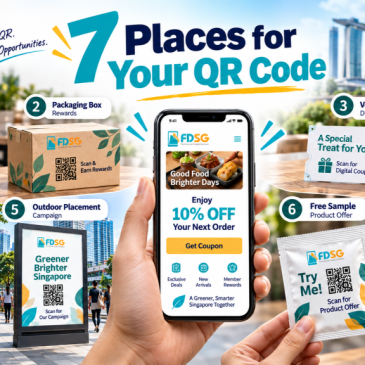
For example, a Singapore café could distribute branded takeaway bags featuring a QR code that offers a discount on the customer’s next visit. A retailer could attach a QR code to shopping bags that leads to a seasonal promotion, while an event organiser could use branded merchandise to direct attendees to a registration page or giveaway. With suitable campaign tracking, businesses can measure available actions such as scans, page visits, coupon downloads and registrations. Where sales data or redemption tracking is connected, they can also assess whether the campaign contributes to purchases. This gives SMEs a more practical way to evaluate their marketing beyond simply counting the number of items distributed.
Before launching a campaign, decide what you want customers to do, where the physical items will reach them, and what incentive will make scanning worthwhile. Choose a clear call to action, make the QR code easy to scan, and test the full customer journey on a mobile phone. What physical item would you use to promote your business: shopping bags, packaging, promotional gifts or another moving brand touchpoint? Comment “OFFLINE TO ONLINE” and tell us your business type and campaign idea. We would love to hear what you are planning and share how FDSG could help connect your physical reach with measurable online engagement.
Q&A
1. What is offline-to-online marketing?
Offline-to-online marketing connects physical promotional activities with digital experiences. For example, a QR code on a shopping bag can direct customers to a landing page, coupon, registration form or digital promotion, allowing businesses to encourage and measure online engagement.
2. Can QR codes on shopping bags help increase sales?
They can support sales by directing customers to relevant offers, loyalty programmes or repeat-purchase coupons. Results depend on the offer, audience, placement and customer experience. Scans alone do not prove that sales have increased, so businesses should measure redemptions or purchases where possible.
3. What should a QR code on promotional merchandise link to?
The destination should match the campaign objective. Options include digital coupons, exclusive offers, product information, loyalty programmes, event registrations, lucky draws and digital flyers. A clear benefit gives customers a reason to scan.
4. How can SMEs measure QR campaign performance?
Businesses can track available metrics such as QR scans, landing-page visits, coupon downloads, registrations and redemptions. Unique QR codes can also help compare different locations, campaign versions or physical touchpoints, depending on the tracking setup.
5. How does FDSG support offline-to-online campaigns?
FDSG combines digital flyer publishing, unique QR-code tracking, landing pages, coupon campaigns and engagement features to help businesses connect physical promotions with online activity. The exact results a business can measure depend on its campaign design and tracking requirements.
Facebook Comments